Few horror franchises have left a mark as deep and unsettling as Silent Hill. Unlike many traditional horror stories that rely on shock value or relentless action, Silent Hill has always thrived on mood, symbolism, and psychological dread. It is a series that understands fear as something internal, rooted in guilt, grief, and suppressed memories. With Return to Silent Hill, the upcoming film adaptation aims to revisit that core philosophy, offering audiences a chance to step back into a world where horror is not only seen but felt.
This new chapter represents more than just another attempt to translate a popular game franchise to the big screen. It feels like a deliberate effort to realign the cinematic version of Silent Hill with the emotional and thematic depth that made the original material so memorable. Rather than simply revisiting familiar imagery for nostalgia’s sake, Return to Silent Hill appears determined to explore why the town exists at all and what it represents for those who are drawn into it.
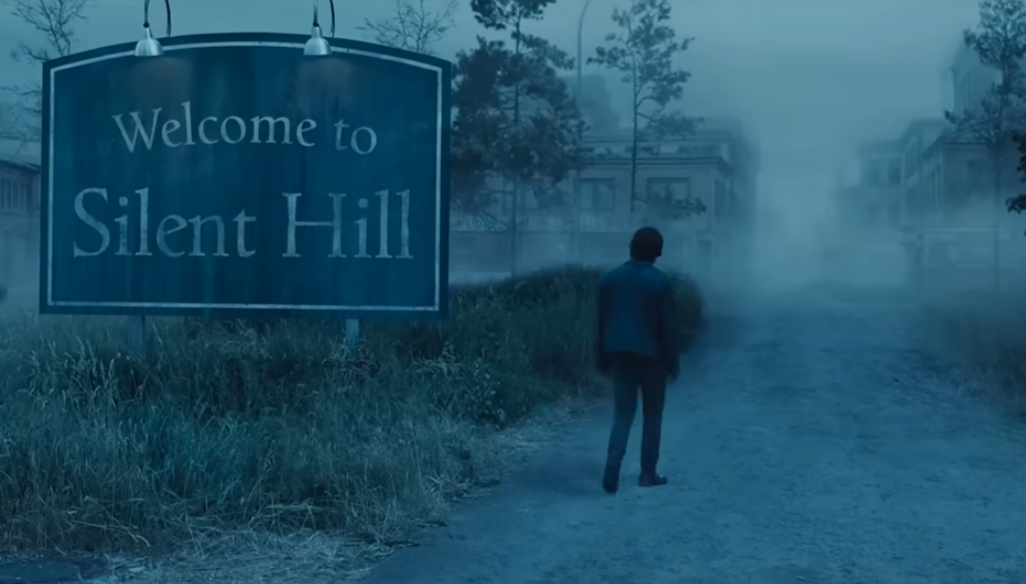
At the heart of the story is a man haunted by loss. After the disappearance of the woman he loves, his life becomes defined by grief and unanswered questions. When he receives a mysterious message suggesting she may still be alive, his desperation overrides reason. That message becomes the catalyst that pulls him back to Silent Hill, a place he may have once escaped physically but never truly left behind mentally. From the moment he crosses back into the fog-shrouded town, it becomes clear that this is not a rescue mission in the traditional sense. It is a confrontation.
Silent Hill has never been a location that people stumble into by accident. The town calls to those who carry emotional wounds, unresolved guilt, or deep inner turmoil. In Return to Silent Hill, this idea is central. The main character’s journey is not about defeating evil or finding a simple truth. Instead, it is about facing the consequences of past actions and emotions long buried. Every empty street and decaying building feels like an extension of his fractured psyche, reinforcing the idea that Silent Hill exists as much within its visitors as it does in the physical world.
One of the most compelling aspects of the Silent Hill mythos is how it uses monsters as reflections of the human condition. These creatures are rarely random. They embody shame, punishment, desire, and self-loathing. Return to Silent Hill seems poised to continue this tradition, using its horrifying imagery not just to scare, but to communicate. Each encounter is meant to feel deeply personal, as though the town itself is passing judgment on those who wander too far into its depths.
Rather than relying heavily on jump scares or constant action, the film is expected to take a slower, more deliberate approach. This is where Silent Hill thrives. Long stretches of silence, broken only by distant sirens or the crunch of footsteps on ash-covered streets, can be far more unsettling than any sudden shock. The tension builds gradually, allowing dread to seep in and linger. It is the kind of horror that stays with you long after the scene has ended.
Visually, Return to Silent Hill looks set to embrace the bleak, oppressive aesthetic that defines the franchise. The town is a decaying shell of what it once was, frozen in a state of perpetual ruin. Buildings crumble, rust consumes everything it touches, and the ever-present fog obscures what lies just beyond reach. This environment does more than provide a backdrop; it reinforces the themes of decay, abandonment, and emotional stagnation. Silent Hill is not a place that evolves or heals. It traps people in their worst moments and forces them to relive them again and again.
The fog itself plays a crucial role. It limits visibility, creates uncertainty, and ensures that danger always feels close, even when nothing is immediately visible. This constant sense of not knowing what lies ahead keeps both the characters and the audience on edge. It transforms simple movement into an act of courage and makes every decision feel consequential.
Another defining feature of Silent Hill is its soundscape, and Return to Silent Hill appears ready to take full advantage of that. The series has always used sound as a weapon, blending industrial noise, distorted echoes, and unsettling ambient tones to create an atmosphere of relentless unease. Silence, too, becomes a tool, making the smallest noise feel amplified and threatening. When the world grows quiet, it rarely signals safety. Instead, it often means something terrible is about to emerge.
The film’s tone also seems committed to ambiguity, which is essential to capturing the spirit of Silent Hill. Clear explanations and tidy resolutions have never been the franchise’s strength. Horror, in this universe, thrives on unanswered questions and moral uncertainty. Return to Silent Hill is expected to resist the temptation to overexplain its mythology, allowing viewers to interpret events and symbolism for themselves. This open-ended approach invites repeated viewings and discussion, encouraging audiences to dig deeper into what the film is really saying beneath the surface.
Emotionally, the story places heavy emphasis on grief and longing. The central character’s motivation is driven by love and desperation, emotions that make him vulnerable to the town’s influence. Silent Hill preys on these feelings, twisting hope into torment. The promise that his lost love might still exist is both a beacon and a trap, pulling him further into danger even as the town reveals its true nature.
This emotional core is what sets Return to Silent Hill apart from more conventional horror films. The scares are not just about survival; they are about self-reflection. The question is not whether he can escape the town, but whether he deserves to. Silent Hill has always been less interested in redemption through heroics and more concerned with personal accountability. The town does not forgive easily, and sometimes it does not forgive at all.
For longtime fans, the film represents a chance to see Silent Hill treated with the seriousness it deserves. The franchise has always existed at the intersection of horror and tragedy, blending deeply human emotions with nightmarish imagery. Return to Silent Hill appears to honor that balance, focusing on atmosphere and character rather than spectacle alone.
For newcomers, the film could serve as an introduction to a different kind of horror. One that is slower, heavier, and more introspective. It challenges viewers to sit with discomfort and think about what the monsters truly represent. It asks difficult questions about guilt, loss, and the consequences of emotional avoidance.
Ultimately, Return to Silent Hill is shaping up to be more than a simple return to a familiar setting. It is an attempt to reestablish Silent Hill as a place where psychological horror reigns supreme. By leaning into its themes of inner turmoil, symbolic monstrosity, and oppressive atmosphere, the film has the potential to stand on its own while still honoring the legacy that fans hold dear.
If it succeeds, Return to Silent Hill could become a defining entry not only in the franchise’s cinematic history but also in modern horror as a whole. It reminds us that the most terrifying journeys are not always about what lurks in the darkness ahead, but about what we are forced to confront within ourselves when there is nowhere left to hide.